
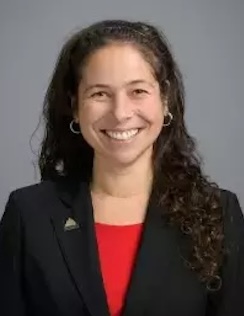
On October 15, Eyes Off Saint Paul conducted an interview via video with Rebecca Noecker, candidate for the open seat on the Ramsey County board of supervisors. Noecker is currently serving as president of the Saint Paul city council. Transcript follows.
Eyes Off:
So I just want to say I really appreciate the people who can make it. I know it’s a tough time for people who have, like, jobs they can’t take off in the morning.
0:23
Eyes Off:
Rebecca, I wanted to say that, I was at your forum, a few of us were at the forum on Monday as well, and we appreciate your responses about Flock cameras, so this is going into kind of more detail about the same topics as well.
Noecker:
And that explains why everybody was a little bit familiar, I think, from the forum.
Eyes Off:
So our, our first question is just kind of generally, what is your personal opinion on the needs or the role of and the scope of surveillance technologies used by law enforcement? And if you want, I can paste these into the chat. That way you can look at them as you answer. I know that’s always super helpful for me.
1:25
Noecker:
Yeah, sure. Yeah, well, first of all, I just want to say thank you for inviting me, and for your interest in this race and the county level of government. I think sometimes it’s an overlooked body of government, and it’s a really important one, and, it’s especially important in terms of surveillance technology. And I’ve been somewhat frustrated on the council as to the lack of action from the county when it comes to this, so I, I’ll be answering kind of my, as my own personal perspective on all of this, but, I hope it’s okay to sort of wrap in like what I’m hoping that the county would do differently or what I would do differently as well.
Noecker:
So again, so thanks for the opportunity. My view, you know, broadly is that, and you probably heard me say this before, public safety and public trust are inextricably connected. and we know that because in St. Paul, we have a really strong separation ordinance, which we made even stronger during Metro Surge, and that is an ordinance that is strongly backed by our police, fire department, and our emergency response department because they know that if people aren’t going to call 911, if they’re afraid to call 911 because they don’t trust law enforcement, because they think their data might be shared with the federal government or for any other reason, everyone is less safe. We have to know that our neighbor, if our house is on fire, if I’m having a heart attack, if my son, you know, God forbid, like falls down in the street and needs help, they’re going to call 911. Not, you know, avoid doing that because they’re afraid.
02:55
Noecker:
So to me, surveillance technology always needs to be balanced with the trust that if it makes us safer as a technology, if it could objectively make us safer, it’s not going to if people don’t trust it. So that’s where I think government is so important, where guardrails are so important, to make sure that technology is actually making us safer, both on the technology side and on the trust side.
3:28
Eyes Off:
I want to give everybody in the call a chance to ask any follow-up questions.
3:41
Eyes Off:
Maybe it would be helpful to talk through what a guardrail is, can you give like an example of what a guardrail would look like to kind of balance trust and safety?
3:50
Noecker:
Absolutely. So one example is data retention. during our police department’s attempts to roll out body-worn cameras, for example, several years ago now, they had an extensive community engagement process. They talked to people, who felt that the data should be destroyed quickly because of privacy concerns, and they talked to people, a lot of people from the NAACP and the African American community actually who felt like data needs to be retained for at least a year because the point of the cameras is for police accountability, and if it’s destroyed right away, then we don’t have that accountability. And working between those two groups and actually bringing those two groups into the same room to talk to one another and to sort of figure out what’s the best way forward given these two different concerns, they ended up with our policy. And so that’s one example where being very clear about how long data is retained and who has access to it, and how someone who is, you know, in it, for example, has access to it. if I’m the subject or if I’m just, you know, a bystander and there’s a body camera, what kind of access do I have to that footage? Those are some examples of guardrails.
4:56
Eyes Off:
Okay, great. Thank you.
4:58
Eyes Off:
Our next question is, like I said, in the forum on Monday, I was really struck by you specifically talking about Flock cameras. But aside from Flock cameras, what other mass surveillance technologies would you work to end the use of?
5:17
Noecker:
So I was really proud of the work on Flock cameras, and that was specifically because they had violated our trust. So we did not have a public process about how Flock cameras would be deployed in the city of St. Paul, unlike our body-worn cameras. I keep drawing this distinction because I think it’s really important when people say, you know, like after I passed the resolution, I was accused of being anti-technology. I was like, I’m not anti-technology that keeps us safer, but there’s a right way and a wrong way to do it. So unlike our body-worn cameras, where we had a whole public process, we had public hearings, Flock cameras did not have the same thing.
05:52
Noecker:
And yet, you know, the county still has their Flock cameras up. So it’s not enough to take down two cameras if we still have eleven cameras running. I don’t think the average person in St. Paul, when the camera went up in your neighborhood, for example, I’m sure you weren’t thinking, is this a city’s camera or a county camera? I don’t know. It doesn’t matter. It’s a camera, right? So, one of the things I would do on the county board would be to pass a resolution doing the same thing on the county board, to move to get rid of our Flock cameras. The county board does not, you know, tell the sheriff’s office what to do, but they do control his budget, and I think having a statement of the county board’s position on Flock, would be really important.
06:32
Noecker:
I think we need to apply the same scrutiny to the other technologies that we use. So we have Axon, we have Skydio. I actually spent three hours last week in the real-time information center with a police department, and with Axon and Skydio technology experts, the people who actually, like, do the data, talking through how it works so that I could better understand it, because I’ve been getting a lot of questions about those technologies as well. The police department gave a lot of information about the community engagement they have done before they instituted their Axon contract. Axon is the same company that does our body-worn cameras, so they do kind of all of our cameras, and our drone technology. Skydio just builds the drone, and then Axon does all of the backend, data storage.
7:18
Noecker:
So I was actually impressed by the number of different safeguards that they have. The problem is nobody knows about them, and there has not been an active conversation with the public to answer questions directly or to say, like they did for the body-worn cameras, what are your concerns about this and what should the right approach be? They seem really open to that conversation, and the, the, I left saying to them, let’s let all the council members do the same thing that I did, and then we really need to have that public conversation. Because I’d actually like to be able to have folks like you in the conversation with the police department, asking them the questions that, that I asked, and probably even better questions, because this is something that, you know, you know much more about than I do, and then figuring out together what should those guardrails be.
08:09
Noecker:
For example, right now, drones only respond to 911 calls, and the data’s destroyed after seven days, unless it’s part of an active investigation. Do, do we want that? You know, does anybody know that? Does anybody know that you can actually see online all the flights that the drones have taken? And if you, if it crosses over your house, you can actually come in and watch exactly what the drone films. Nobody knows that. So those are some examples. And technologies, I think we really need much more public engagement and much more public setting of targets.
8:44
Eyes Off:
I have a follow-up question. So the city has a contract with Axon to provide automatic license plate readers in patrol vehicles. And so talk a little bit about your position on having what is essentially the same type of technology in a patrol vehicle versus a Flock camera that is, you know, posted somewhere more, in a more public way.
9:16
Noecker:
Yeah. I think the big question, the big distinction to me between Flock cameras and really everything else is the networked nature of that. The whole, the name Flock meant sharing. And where we got, you know, where I think the biggest issues were, were the fact that once you share with one agency, you are trusting that that agency is going to follow the same standards that you follow. And in St. Paul, I’m proud of our police department and the work they’ve done to build trust.
9:44
Noecker:
There’s a lot of work to do, but one of the fastest ways to destroy all of that is to share data with another department that doesn’t follow those same rules and over whom we have no control. And we have to take their word for it. So to me, anytime we’re sharing our data outside of our own department, that’s a problem. And, you know, for Axon — the drones, the body-worn cameras, car cameras, you know, similar technology, [there are] guardrails there where the data is not shared outside of St. Paul. And that to me would be like a red line. I mean, if that were ever not true, if I learned that that data was being shared, that would be, that would be to be reigned in.
Eyes Off:
Okay. Thanks for that. Can you speak about how long that data’s retained, the Axon data?
10:37
Noecker:
So the Axon data from our drone flights is seven days. I believe, I don’t want to mistake this because I took a lot of notes. I believe that the data retention policies for our, body-worn cameras and our car cameras, I want to say that it’s a year, but I, I don’t, I don’t remember the exact time period. I believe that they have the policy online and that it’s spelled out there.
11:09
Eyes Off:
Okay, I’ve not seen it when I looked.
11:11
Noecker:
Okay. And I can get that information, maybe even during this call.
11:20
Eyes Off:
We were speaking a bit recently about how the service is like, a black box of information on big databases. And that’s been my question.
Eyes Off:
Yeah. One real quick black box disambiguation question, if you all are okay with that. Specifically, you said that Axon usage data isn’t shared. Did anybody say if it was, you know, if that was a capability that they were considering?
11:51
Noecker:
I’m sorry, did the police department say they were interested in using the capability to share data beyond the police department?
12:06
Eyes Off:
Correct, yeah.
12:07
Noecker:
Okay, no, they did not say that they were interested in doing that.
12:10
Eyes Off:
All right, thank you.
12:22
Eyes Off:
Next question is sort of related to transparency. I think that’s, you know, watching national news on this issue, it’s pretty typical that, you know, cities, counties, citizens in these areas don’t find out about these technologies until they’re already installed and operational. So our next question is, how would you preemptively address and dissuade future end-runs of our elected officials, by private entities, such as Flock, Axon, etc., from directly engaging with law enforcement in installing their technology?
12:58
Noecker:
Yeah. well, I think two things. One, This process has really helped send that message to our police department. we did not grant them the ability to apply for a grant that they were looking to get to expand the drone program because we felt like that transparency had been missing from the public. And as a result, we were invited to tour the Real-Time Information Center to understand things better, to really engage with them. And I will tell you genuinely, you know, they have been asking, what, what more can we do to help you and or the public understand this technology? So public officials in partnership with groups like yours paying attention and putting the brakes on things until there’s been enough transparency is part of it. And so that’s, that’s exactly what we’re doing. Another thing that we can do is update our… we can change our ordinances to spell out which contracts the city council has to approve.
13:59
Noecker:
I actually recently did this with a totally different subject, but: my West Seventh neighbors were surprised and upset when a new trash hauling company chose to locate in an area that they had designated for residential development, and turned out that that forty-five million dollar public facing contract was not something that the council had to approve. So we just changed our code to make it so that going forward, the city council has to approve contracts with the trash haulers. So there’s no rhyme or reason for why the council, there’s a list of contracts that we do and don’t approve. we can make a decision to change that. And so, again, if one of the things that the public says to us, you know, this would really make us feel better is if there’s this process every time there’s a new technology considered and a new contract considered, the council can give itself that oversight.
14:58
Eyes Off:
Is that true also at the level of the county, if you should get into the county board?
15:06
Noecker:
Yeah. So it’s, I’m, I’m not actually sure if the county board has the same authority over the sheriff’s contracts. I know that the sheriff has a lot more autonomy than the police department does because he’s independently elected. That said, the county, again, controls his budget, and so I would have to imagine that they would be within their rights to at least pass a resolution saying we want, even if they can’t encode, spell that out, and maybe they can, this is some of the research that I, intend to do. One of the first things I did when I started in the city council was to sit down and get kind of the 101 from our budget director on every single option available to city council members to make policy and to make budget decisions, and I’ll do that at the county as well. But if it’s not their authority in code, they can certainly pass a resolution and say we want to look at all of these contracts, we want to look at all of these grant applications, and again, if he chooses to completely disregard that, that’s something that the county board can take into account when they pass the budget.
16:11
Eyes Off:
Thank you. Next question is a shorty. What role should the public play, in your opinion, in sort of, you know, theory of governance, what role should the public play in giving their consent to AI-powered mass surveillance?
16:28
Noecker:
Well, again, I think this goes back to the process that we follow when AI or surveillance in general is adopted in the first place. So I think the public needs to be involved. one of the things that I think can be really helpful from public-facing groups, like Eyes Off, is to create the conditions and the places and the settings and the convenings where that both input and consent can be given.
16:53
Noecker:
One of the things I find not helpful about the way our current system works is that our public hearings and our public input is done at a city council meeting. It’s just not the most accessible space for a lot of people. And it also happens at the moment of a decision, right? Often we’re having a public hearing and then we’re either right then or maybe the next week and they take a vote. And a public hearing is only one way, you know, we’re listening and we hear from the public.
17:15
Noecker:
But what I find most helpful, especially with something as important and complicated as these topics, is actual dialogue. So, you know, and the police department can host one and council members can host one, but that’s not the same thing as when a community-driven group hosts a conversation like that and invites us in to be guests, not hosts. It feels really different. So I would say, I would love, one of the reasons I was really excited to get your invitation. I would love it if Eyes Off would be a group that would be helpful, maybe co-partner, co-host, etc., in convening and helping facilitate some of this community engagement that we want to do that I think is essential for us to do. And then that, that process, that discussion will guide those decisions about the formal ways for community input over time.
18:04
Eyes Off:
On the subject of the input we might give to the police department, for instance, do you think that they might be willing to open the RTIC tour to us?
18:19
Noecker:
I think it’s certainly worth asking. I mean, he was very clear with me. He was like, we really want to do everything we can to make this transparent. So I think I, I actually was going to ask if you sat down with the Deputy Chief, Kurt Hallstrom is his name. I would I would do one of these [Zoom calls] with him. If you’re interested, I’m happy to share his contact info. And I’d ask that of him directly. And if, you know, if not that, like what can we do to get some assurances? I went down right after the, we spent two and a half hours, drilling them, and then we went down to the room where you actually like, they’re flying a drone. And as I walked in, I saw it going over a neighborhood, and I was looking for a 90-year-old woman who was missing and who they thought was going to be on a train or near a transit station, so it was kind of circling transit stations, and, I saw it in action, you know, and I think that that’s really helpful for people to see.
19:12
Noecker:
So there’s one other thing I was going to say to your question. Oh, another place where public input, by the way, is super helpful, you know, council members are generalists, right? We know this much about a lot of things. We are not subject matter experts, especially on things like technology, and I was talking to one of my constituents who attended a recent council meeting, and he was asking me questions about, you know, how do you know that the data is really deleted? There’s so many ways of deleting. Is it completely deleted? Is it right? And those were things that I would have never thought about on my own.
2e19:42
Noecker:
So when I went to the Real-Time Information Center, I was drilling the Axon rep on what deleted means. And he, it meant, he said, it’s overwritten by the new data. So it’s literally unrecoverable. It’s not just deleted, it’s unrecoverable. And like, there’s all these different levels, right, of unrecoverable and deletion, and I still don’t know much about that, but you do. And so having the public who knows a lot about these subjects, helping advise us and helping us know what questions to ask or asking the questions directly, is so valuable.
Eyes Off:
We are doing a forum next mMonday, I don’t now if that’s a useful thing, if that’s public-facing in the same way?
Eyes Off:
Your colleague, Council Member Kim, is facilitating a panel on…
20:41
Noecker:
Oh, yes, yes, I saw that.
20:44
Eyes Off:
Yep, and so we will be in attendance for that as well.
20:46
Noecker:
Awesome. Yeah, and by the way, I know this is, you know, of interest to many of my colleagues. I recognize that I’m being invited because I’m running for a particular seat, but the good news is that to get anything done on the council, we need at least four people, sometimes five, depending on where the mayor’s at. And this is something of broad interest. So that was another reason why I really wanted all of our colleagues to go to the Real-Time Information Center so that we could all have a conversation about what are our next steps for the community engagement that has to happen here.
21:17
Eyes Off:
Certainly. related to that, I just want to ask a real quick question, and I don’t know what familiarity you have with this, but, there’s like a clear demonstrated policy that organizations like Flock and Axon deploy to essentially provide coaching to law enforcement to “own the narrative.” And so, you know, I just want to call out, I guess, as a word of maybe caution and even preemptively having this discussion of, you know, what, what your position would be on law enforcement utilizing this type of training to sort of propagandize or sway public opinion of these technologies. So if you could kind of like give us your gut reaction on that.
22:20
Noecker:
I think that’s a concern. Absolutely. And I, I think one of the hardest parts of this is sort of knowing who to trust, right? and that’s why I’m suggesting that I think law enforcement’s perspective on this is kind of not irrelevant, but it’s not the most important voice in the room. That’s why I think rather than the police convening a conversation or me convening a conversation, if I offer other community groups were to say, we’re bringing people into this discussion, you know, and really, I think the ask to the community, and this is a tough ask, but is, what do you want to see? You know, what would give you the assurance that you need to feel like, to feel like we can move forward? I think we’re in this position right now of concern and of, of questioning and of suspicion, which is earned. And, and I think the, the question that I’m facing is how do we move past that? What would allow the community to move past that? is it something like what we did with body-worn cameras, for example, or, and so I, in that conversation, the police department’s perspective and propaganda is not relevant, you know, they’re answering questions and demands, not out there proselytizing with all the technology, if that makes sense.
23:33
Eyes Off:
Yep. Yep, it does.
23:36
Eyes Off:
A follow-up question that’s kind of broader. I think one thing that we’re hearing from, and have been kind of frustrated, honestly, to hear from council members and from like public-facing police representatives is this, sort of concept of moving past these concerns. Like, what happens if we, as a community, as a society, end up deciding that, no, we actually don’t want any of this. This isn’t something where we can allay our concerns and then move on. What if the, like, public response is: We don’t want AI-powered surveillance at all?
24:19
Noecker:
I think that has to be an outcome, right? I mean, for any, like, legitimate conversation, an outcome has to be there is no thing that could be done to help us get past this suspicion.
24:31
Noecker:
I would always prefer to assume that there is something that can be done with any technology that can make it okay, because every technology, I think, has benefits and has the potential for abuse. And I think… So I think the conversation, from my perspective, should always start with; is there anything that can benefit us from this? And is there enough that we can do to allay any harms from this?
24:56
Noecker:
I recognize that AI is a totally new thing, and it might be, and I, you know… when I tuck my kids in bed at night, I’m thinking about their future and thinking like, oh my god, you know, have we passed the threshold of what’s, you know, just a new, you know, we’ve gone from the tablet to paper to the computer to our phones, but this is a different thing, right? And maybe we have. So I, I absolutely think that that’s a legitimate conclusion. That is a conversation, obviously, that has to happen with the entire community. And again, just like we were talking about with body-worn cameras, you know, there were people who said, I want this data because I want to be able to hold police accountable or I want to be able to find my 90-year-old grandma or whatever the case may be.
25:44
Noecker:
But if we start by saying that’s not an okay outcome, then we’re not having a real conversation.
25:48
Eyes Off:
Great.
25:53
Eyes Off:
Thank you. Speaking of concerns, question: What does the oversight of these programs look like at the county level? You know, in your dream world, who participates in oversight, how is this oversight communicated with the public, and what recourse will be available when these programs run afoul of this oversight?
26:32
Noecker:
So dream world at the county would be that whenever any one of these conversations speak at the very beginning, there’s a conversation with the county board. There’s an open information session where the sheriff in this case would present, you know, here’s the technology I want to use, here’s why I want to use it… One of the things I started at the city council (I think the county has a form of this already, but if not, I would like to introduce it), is what’s called a “policy session,” where all of the ideas about potential policies are vetted publicly before they ever proceed.
27:03
Noecker:
So it used to be the case that you had a policy idea, you know, you would come and meet with me in my closed door, and then you might go and talk to other customers behind their closed doors, and no one would ever even know something was coming, and we wouldn’t have a chance to hear what each other thought or hear other perspectives brought in. So now we have this process where we hear ideas at the very, very beginning before anything else happens out in policy committee (not outside in public), in policy committee inside in our chambers.
27:29
Noecker:
And, and I think something like that to start would be a good process. And then I think, again, there needs to be this, and I think this is a good place where the county can learn from the city. We have this, this really robust network of district councils. We have 17 district councils citywide, in addition to numbers of advocacy organizations and grassroots community-based organizations that should be engaged to help convene these conversations. And I think it’s a, you know, six-month process at least of going around, trying to figure out what, here’s the proposal, here’s the draft, what do you think, any input? And then what comes to the county for adoption is something that’s already in front of the public, that makes the public’s mind up that actually will, you know, doesn’t really allow back-and-forth as part of the process, but at least it gives another opportunity for public input.
28:17
Noecker:
And then adoption with some sort of, I’m a big believer in check-in points. So, you know, after a year, let’s come back and revisit this. I just passed, for example, this massive tree preservation ordinance that I talked about at the forum, and one of the conditions of that is every year we’re going to reevaluate how this is working. so that an ordinance is never, is never done, and then you can go away and you can run it in the dark, especially with technology, right? Because technology is evolving every second, and so we, we can’t just say, oh, we wrote this policy a year ago, it’s exactly the same applicable policy today.
28:50
Eyes Off:
Great.
29:03
Eyes Off:
So I think we only have a half hour set aside, correct?
29:08
Eyes Off:
I think we have an hour on the calendar.
29:08
Noecker:
Okay.
29:10
Noecker:
Thanks. I want to make good use of your time, so whenever you’re done with me…
29:14
Eyes Off:
I think we just have two more questions. So I think we’ll be keeping it at forty five [minutes].
29:26
Noecker:
I know you’re giving me a lot more time to think and respond than the League of Women Voters, by the way.
29:31
…
30:01
Eyes Off:
I know you’ve been speaking about it extensively for a while, and at the forum as well. What would you do specifically to end the use, specifically, of Flock cameras?
30:17
Noecker:
Yeah. So, as I mentioned, at the council, it was a resolution, it was unanimous. You know, I am grateful to, I have to acknowledge that the, the council doesn’t actually control the use of any, doesn’t control the executive side, and so this was something where our mayor was also in lockstep with us, and so the same day we passed a resolution, she ordered the cameras to come down. And I can’t take full credit for that as a legislative body, because that was also something that was we partnered with the mayor’s office on. In the county, things would be different. There’s no mayor, there’s no other body of government, it’s just the county board. But the sheriff is independently elected. So, I strongly believe in, if the county has a position on something, it is important for it to be passed in a resolution to codify that and to let the public know and to let the departments know this is what we believe. These are our values. So I would pass a resolution just like this at the county level. I would have the sheriff come in and talk about his plans to abide or not abide, and then we can make decisions based on what he says going forward about his budget and other things.
31:24
Noecker:
On this campaign, there have been some conversations and questions about an independently elected sheriff, versus an appointed sheriff. Apparently most sheriffs throughout the country are elected. It’s very unusual to have an appointment, and I believe we would need to change either the charter or the state constitution to change that in Ramsey County, so it would not be a small lift. But there are, everything is changeable.
31:53
Eyes Off:
Can I just ask a quick follow-up question? One thing that I think… there is a lot of public backlash, maybe, related to the Ramsey County Sheriff and the amount of time that he spends on YouTube. And so maybe you could talk a little bit about what that could potentially look like going forward in terms of, you know, putting in some sort of… how would you directly address that?
32:32
Noecker:
Yeah, that’s a wonderful question. yes. Well, and not only by the way, Live on Patrol or whatever he calls it, but, I mean, following unsafe policing practices within the city of St. Paul. And for example, we do not conduct high speed chases, the police do not conduct high speed chases because they’re not safe. Better to let the car get away than to drive through a residential neighborhood at eighty miles an hour in pursuit.
33:00
Noecker:
The sheriff’s office does not follow that policy, and because they have jurisdiction in Saint Paul, they can drive through Saint Paul at eighty miles an hour in pursuit and film that for YouTube. So, I don’t know. I don’t, I think that that is likely, again, one of those things that as someone who has your own election certificate, you are allowed to promote yourself and your department, but mostly yourself in any way you want.
33:24
Noecker:
I would, again, Use our opportunity as a budget-setting authority, though, to ask questions about that and to daylight that. So I have not heard the county commissioners, and, you know, you probably can tell this from my answers today and my answers on Monday, but I’m, I’m generally frustrated with the sort of business as usual, sleepy, quiet approach of the county, the fact that most people I’m talking to have no idea what the county even does is a problem because they affect everybody’s daily life, they’re more important than ever when they’re being attacked by the federal government, they have a billion-dollar budget, people should know what they do. But part of that is because I think commissioners often see it as a quiet job, a peaceful job, you know, I can go here, take a retirement opportunity, and at 42 I assure you I don’t see it as a retirement opportunity, but they don’t take advantage of their, they have a platform every single week on Tuesday mornings at 10 a.m., super accessible public time, to talk about the budget and to talk about, and to hold people to account. So I would make the most of that opportunity.
34:26
Eyes Off:
Okay.
34:31
Eyes Off:
Great. Thank you so much. This is our last question, I think this is an especially important question at the county level. So if you could speak specifically to: Where does “the buck stop” when it comes to reviewing and signing these contracts with AI-powered mass surveillance companies?
34:58
Noecker:
And I hate that the last question is the one where I don’t know, but I also don’t want to say anything that is not true, and I want to be honest about the fact that I need to better understand whether it is the sheriff or the county board that gets to sign off on sheriff department contracts. I would hope that that is something that the county board has the authority over. I think it makes sense given that they control the budget. Again, contracts are a budgeting function. And so if it weren’t the case that it is the county board, then I would look to see what I could do to change that. I think I said this at this forum, but I’m always asking why do we do things the way that we’re doing them, and why can’t we do them a different way? Like, critical questions are my love language. And, so even if the answer is, well, we don’t do that, it’s the sheriff, then I would ask why not? And what does it take to change that? Just like I asked about what would it take to change that the sheriff is an independently elected body.
35:50
Noecker:
Again, it makes sense to me, especially because the county is also the only public-facing entity, the board is the only public-facing entity and publicly accountable entity of the county. The sheriff is publicly accountable once in four years, but the county board has to show up every week and be public. So, it should rest with the board.
36:14
Eyes Off:
All right. Thank you so much. Are there any other questions that people have been cogitating on?
36:25
Eyes Off:
I have one question that spans a couple of the previous ones. Specifically, since you called out organizations such as ours for helping to, you know, tell you and other council members what questions to ask and how to look at things, and then you also brought up the, the yearly ordinance rechecking, as technology progresses. I mean, that just sounds like a lot. So the question from my side would be: What are good ways — sounds like you had a hallway conversation to ask about deleting and how that works — but what are good ways to bring that to the attention of council members at city or county?
37:09
Noecker:
Yeah, I have two ways of answering that question. I mean, again, this is, we’re in a changing landscape. So right now, what I think we need to do is have this structured community engagement process. We have to have multiple conversations throughout our city about the technology we have, about the guardrails we have, and about what we want to see. And that is a place where subject matter experts would bring up, yeah, but you’re not thinking about this. Yeah, but that clause does not strengthen and protect against that.
37:42
Noecker:
So that’s kind of like a one-time thing for the technology we have now. What we might want to do, what we might decide we need to do, and this could come out of a process like that, right? I’m very aware that I do not have all the answers here, so that’s probably why I’m like, let’s talk about that. But one thing that might come out of it might be the, a decision to create an ongoing body that advises on this. So we have twenty-two boards and commissions in the city of St. Paul right now. They do everything from the planning commission, which meets every other week and makes major planning decisions about how our land is going to be used, to be our fair carousel committee, which governs the carousel at Como Zoo. And if you didn’t know, you can help govern the carousel at Como Zoo. And everything in between, right? So maybe we decide that we don’t have one on technology.
38:28
Noecker:
We’re kind of in an age when maybe that’s important. And so maybe we decide we want to have some sort of ongoing body, and the purpose of that body is specifically what you’re saying, to, to weigh in on, and then maybe what we do is that, that then gets written in, right? So like, just like right now, a district council is asked for its input before we make decisions on zoning. If anything relates to technology or contracts, it first has to go through the technology advisory committee to make a recommendation before it comes to the council, right?
38:58
Noecker:
That’s typically how we engage subject matter experts on an ongoing basis. And that also lessens the burden on the community, because I want to be really honest and grateful to you. Like, you all have other things to do in your lives than, than this advocacy, and I’m grateful that you’re doing it, but that gives a container for it, right? So then you’re not constantly worrying, like, who’s advising us on this, and, you have a place to go, you know, if you’re, you can either serve on it, you can go to it and give it recommendations, right? Like, it, it kind of makes it more, more formal.
39:31
Eyes Off:
Great.
39:36
Eyes Off:
Looks like forty-five minutes, is just about right. Thank you so much again, Rebecca. We, appreciate you taking the time to dig through all these questions with us. I think what we’re planning on doing next is, as soon as we have accurate quotes and as soon as we meet with your opponent, we’ll have a side-by-side comparison available to the public that are invested in this specific issue.
40:08
Noecker:
Thank you again for your time, and seriously, I look forward to staying in touch.
40:11
Eyes Off:
Great. Thank you so much. Take care. Bye-bye.